What is Molela Terracotta?
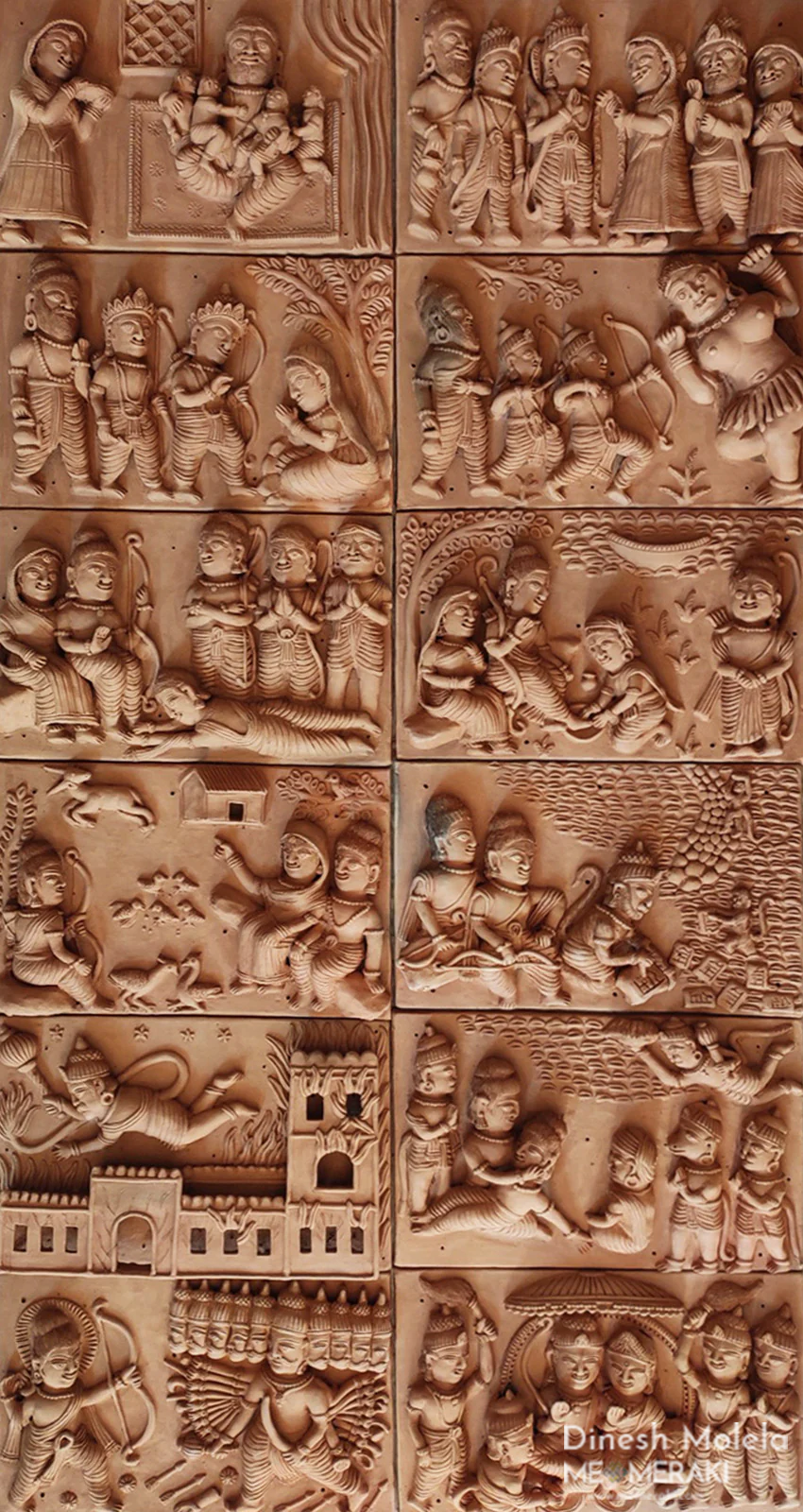
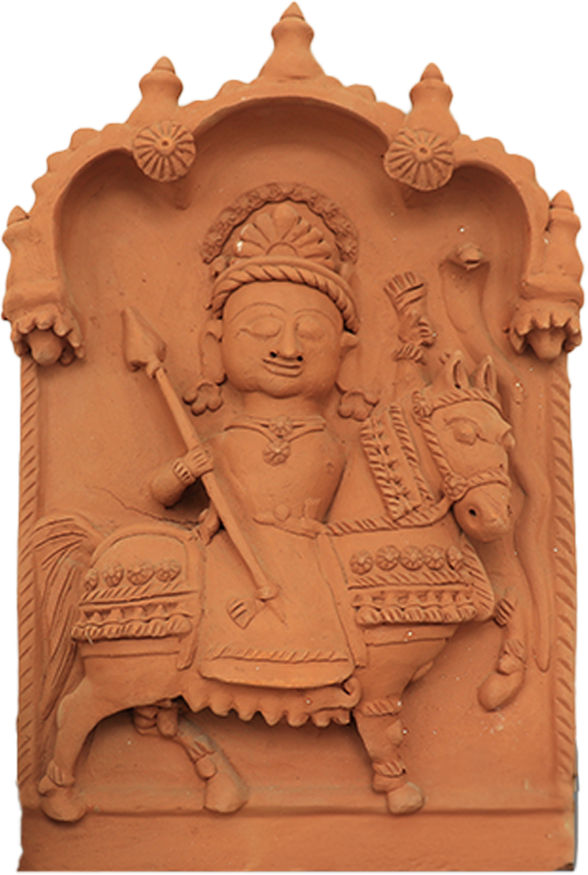
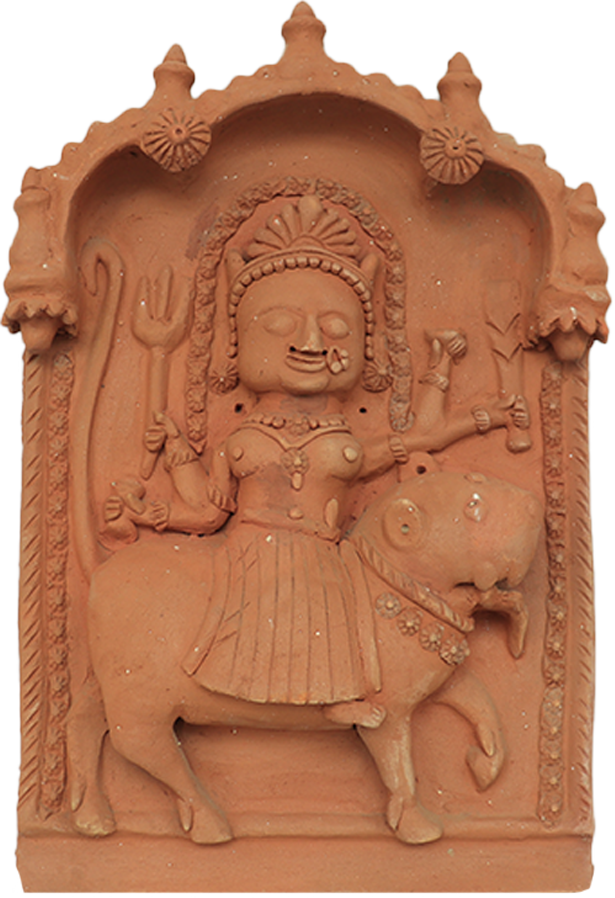
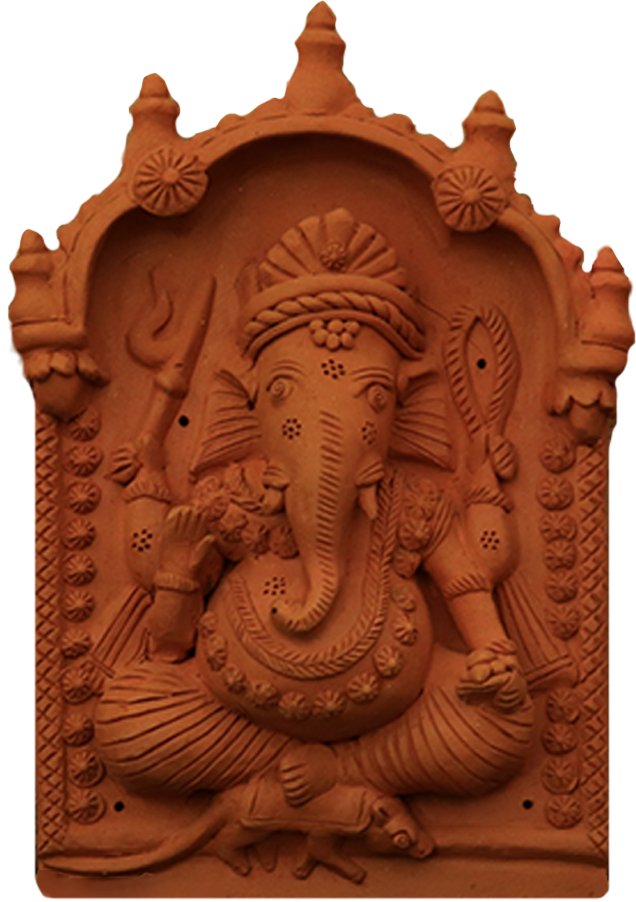
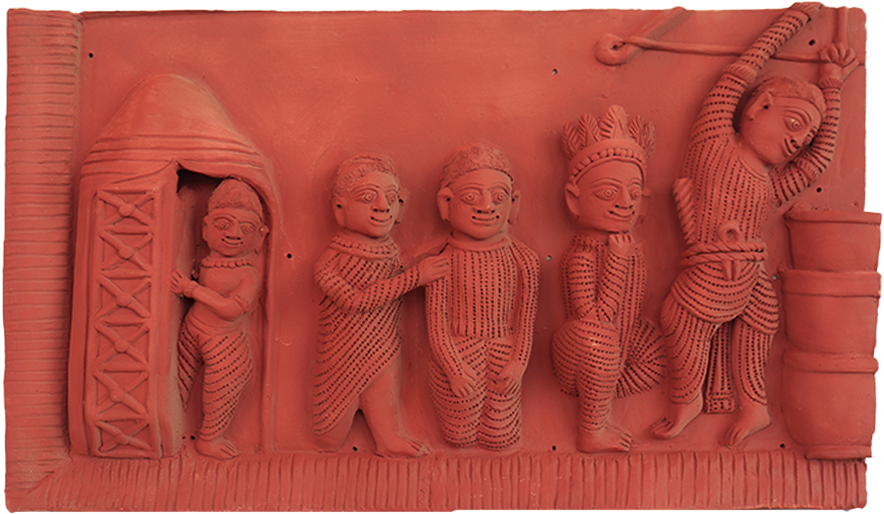
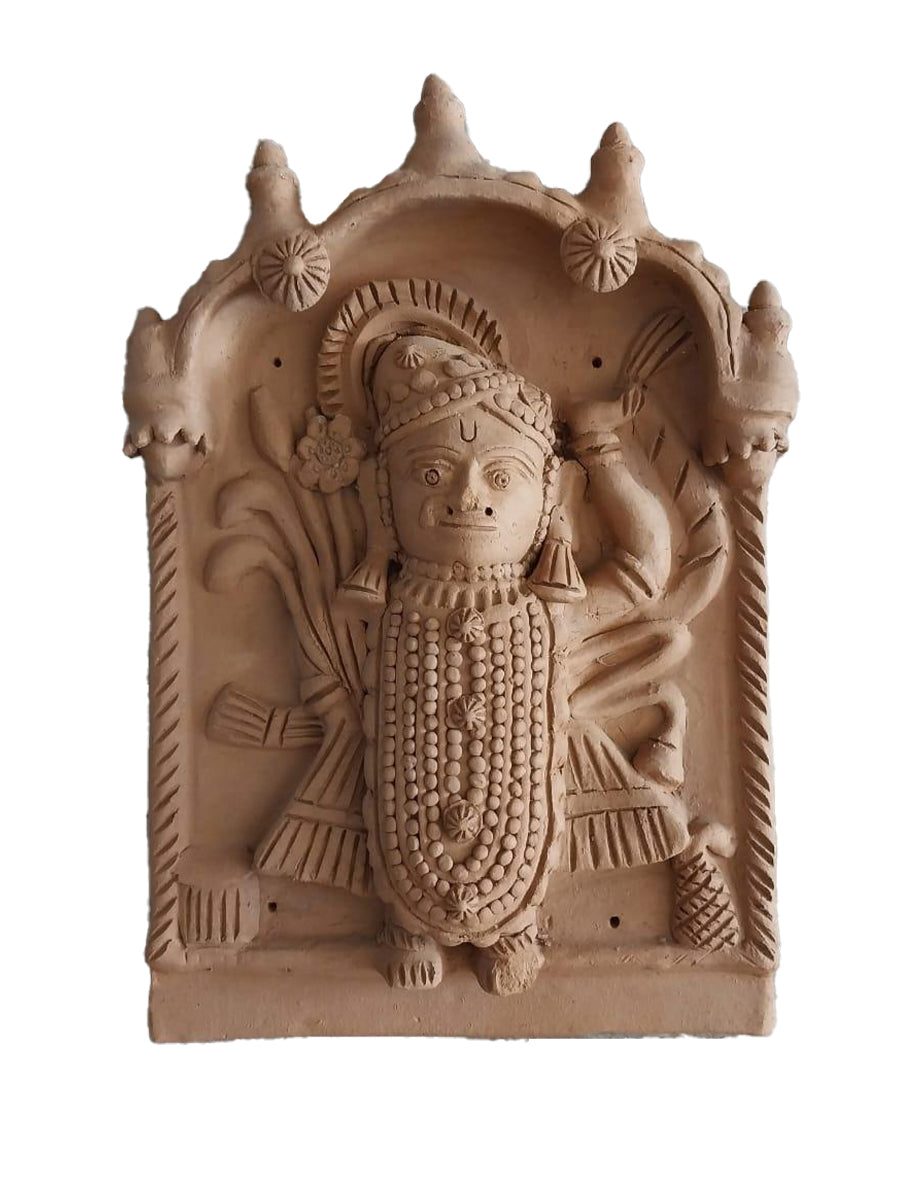
Molela terracotta is a distinctive hollow-relief style within India's broader terracotta tradition, native to Molela, a small potters' village on the banks of the river Banas in Rajasthan's Rajsamand district. Unlike solid terracotta sculpture, every handmade Molela terracotta piece is built as a raised relief plaque, traditionally designed to resemble a miniature temple, complete with domes, pillars and a central deity, made by hand-pressing and pinching clay onto a flat tile rather than using moulds. This gives Molela wall art its unmistakable votive, shrine-like character.
Practised for generations by artisans of the Kumhar caste, Molela terracotta has long served as devotional art for the Bhil, Garasiya, Gujjar and Mina communities of Rajasthan, Gujarat and Madhya Pradesh, who traditionally purchase new plaques each year to honour their folk deities, a living tradition that continues alongside the craft's growing popularity as home décor.
Key Features of Molela Terracotta
- Built as a hollow, raised relief rather than a solid sculpted form
- Traditionally shaped like a miniature temple, with domes, pillars, and a central deity
- Entirely hand-built with no moulds, using simple tools and rice-husk-tempered clay
- Fired in an open, circular kiln known as an awara
- Strongly associated with folk deities such as Devnarayan, alongside the wider Hindu pantheon
- Rooted in the Kumhar potter community of Molela village, Rajasthan
- History of Molela Terracotta
Origin of Molela Terracotta
The origins of Molela terracotta are traced to local legend rather than recorded history. According to popular lore, a blind potter dreamt of the folk deity Devnarayan, who asked to have his image made in clay; despite his blindness, the potter agreed, and the craft is said to have taken root in Rajasthan from that moment. The tradition has been carried forward by the Kumhar caste for many generations, with some accounts placing its roots more than 700 years back.
Evolution of Molela Terracotta
For centuries, Molela terracotta served an almost entirely devotional purpose, with plaques of Devnarayan and other folk deities purchased annually by pilgrim communities and their priests, or Bhopas, to replace older plaques and ward off misfortune. Over time, as the craft gained wider recognition, artisans began expanding beyond religious plaques to depict mythological epics, courtly and rural scenes, and eventually decorative wall art suited to contemporary homes, while continuing to work entirely by hand with no moulds.
Contemporary Molela Terracotta
Today, Molela terracotta is practised almost exclusively within Molela village, where the Kumhar families continue a craft passed down for fifteen generations in some households. Padma Shri awardee Dinesh Molela has been central to bringing the craft to national and international audiences, and the Rajasthan government has proposed a dedicated Shilpgram in the village to give local artisans a stronger platform to exhibit and sell their work.
Molela Terracotta Themes and Motifs
Deities in Molela Terracotta
Deities are the heart of Molela terracotta, spanning both the Hindu pantheon and Rajasthan's folk traditions, a range explored in more depth in our blog on the deities of Molela terracotta. Ganesha appears in numerous forms, seated, riding a peacock, playing music, or shown with his mushaka, alongside Durga, Saraswati, and the fierce, wide-eyed form of Bhairav. Folk deities hold equal importance, particularly Devnarayan, along with Momai Mata and Dharamraj, the keeper of karma, reflecting the craft's roots as protective, village-worshipped art rather than purely temple sculpture.
Krishna and Devotional Narratives
Krishna appears frequently through scenes such as Radha-Krishna seated on a swing, Gau Charan Leela depicting Krishna among grazing cows, and devotional plaques of Shrinathji, the seven-year old form of Krishna central to Rajasthan's Pushtimarg tradition, alongside representations of Tirupati Balaji.
Animals in Molela Terracotta
Animal motifs in Molela terracotta range from devotional vehicles to standalone studies, elephants, rhinoceroses, and cows rendered in relief with bold outlines and dotted detailing that artisans and collectors often liken to the aesthetic of ancient Harappan seals, tying the craft visually to some of the earliest clay traditions on the subcontinent.
People and Folk Narratives in Molela Terracotta
Beyond devotional themes, Molela artisans depict scenes of everyday and legendary rural life, musicians known as baajewale, a man milking a goat, temple doormen, and the romantic folk legend of Dhola and Maru, alongside larger narrative works portraying scenes from the Ramayana and Mahabharata, such as Arjuna in the Lakshyabhed pose.
Molela Relief Patterns
The signature visual pattern of Molela terracotta is its temple-like structure: a central deity flanked by pillars, capped by domes, and framed with floral beams, all built up as raised relief rather than flat surface decoration. Surfaces are traditionally finished in a natural sandy-red hue using a pigment called geru, with white detailing from a mineral called khadi and black obtained through natural means, giving every plaque its warm, earthy palette.
How Molela Terracotta is Made
Clay and Preparation
Molela terracotta begins with clay sourced from riverbank ponds near the village, mixed with a small proportion of horse or donkey dung and rice husk to achieve the right workable consistency for hand-building without cracking during firing.
Hand-Building Without Moulds
Unlike many terracotta traditions, Molela artisans use no pre-made moulds. Every stage- kneading, throwing, cutting, and pinching the clay- is done entirely by hand using simple tools such as a smooth round stone called a pindi and a chisel-like tool called a badli, a process detailed further in our blog on Molela terracotta of Rajasthan, building the raised relief figures directly onto a flat square tile base.
Firing and Finishing
Once shaped, plaques are dried and fired in an open, circular kiln known as an awara. Depending on the desired finish, pieces are left in their natural sandy-red tone using the geru pigment, or detailed further with white khadi and black mineral colour, completing the plaque's distinctive earthy, temple-like appearance.
Famous Molela Terracotta Artists & Master Craftsmen
Dinesh Molela
Dinesh Molela is a Padma Shri awardee whose family has practised the tradition of Molela terracotta, and the devotional iconography behind it, for fifteen generations. Trained by his father from the age of ten, his work is held in national and international collections, and he continues to demonstrate and teach the craft through his own Molela terracotta masterclass on MeMeraki.
How to Identify Authentic Molela Terracotta
-
Hollow relief construction: Genuine Molela plaques are built as a raised, hollow relief rather than a solid slab, a result of hand-pinching clay onto a tile rather than pressing it into a mould.
-
Natural, uneven surface tone: Authentic pieces show the warm, slightly variable sandy-red of natural geru pigment, rather than a flat, uniformly printed or glazed finish.
-
Visible hand-tool marks: Look closely for subtle traces of hand-shaping and tool work; Molela artisans use no moulds, so exact symmetry across multiple pieces is unlikely.
-
Artist and village attribution: Since the craft is concentrated almost entirely within Molela village and the Kumhar community, buying from a platform that names the specific artist, such as Dinesh Molela, and provides a certificate of authenticity is the most reliable way to confirm genuine work.
Molela Terracotta for Home Décor
Molela terracotta's earthy, sculptural relief brings a warm, devotional character to a home, making it especially suited to pooja rooms, entryways, bedrooms and living rooms where its temple-like form and folk storytelling can take centre stage. Larger narrative plaques, such as scenes from the Ramayana or Gau Charan Leela, make striking statement pieces above a console or as part of a gallery wall. At the same time, smaller animal or single-deity tiles work well as accents in a living room or study.
Gifting Guide for Molela Terracotta
A handcrafted Molela terracotta plaque makes a meaningful, culturally rich gift for housewarmings and festive occasions, particularly for anyone drawn to devotional art and Rajasthan's folk traditions. Its sculptural relief and earthy palette set it apart from a conventional painted or printed gift, and it pairs well with other pieces from our gifts and souvenirs collection.
FAQs About Molela Terracotta
What is Molela terracotta?
Molela terracotta is a hollow-relief clay craft from Molela village in Rajasthan, where artisans hand-build temple-like plaques depicting Hindu and folk deities, mythological scenes, and rural life, without using moulds.
What makes Molela terracotta different from other terracotta art forms?
Its raised, hollow-relief construction and temple-like design set it apart. Rather than a solid sculpted form, each piece is built as a flat tile with figures pinched and pressed up in relief, traditionally resembling a miniature shrine.
How can I tell if a Molela terracotta piece is authentic?
Genuine pieces show a hollow relief structure, a natural, slightly uneven sandy-red surface from geru pigment, and subtle hand-tool marks, since no moulds are used in the craft. Buying from a platform that names the specific artist is the most reliable way to confirm authenticity.
Is Molela terracotta durable for everyday display?
Yes. Once fired in a traditional kiln, Molela terracotta plaques are sturdy for indoor wall display. Keep pieces away from direct impact and excess moisture, and dust gently to preserve their finish.
Can I buy Molela terracotta online from MeMeraki?
Yes, this collection lets you buy authentic Molela terracotta online, including devotional plaques, mythological scenes, and folk narrative pieces by Padma Shri awardee Dinesh Molela, with worldwide shipping and an authenticity certificate included with every purchase.
Does Molela terracotta make a good gift?
Yes. Its devotional, sculptural character makes it a meaningful gift for housewarmings and festive occasions, whether given as a single plaque or paired with other pieces in a gallery wall set.
Show Less


 Backed By MeMeraki Promise
Authenticity • Safe Delivery • Easy Resolution
Backed By MeMeraki Promise
Authenticity • Safe Delivery • Easy Resolution